
An Interview with Nancy Bilyeau
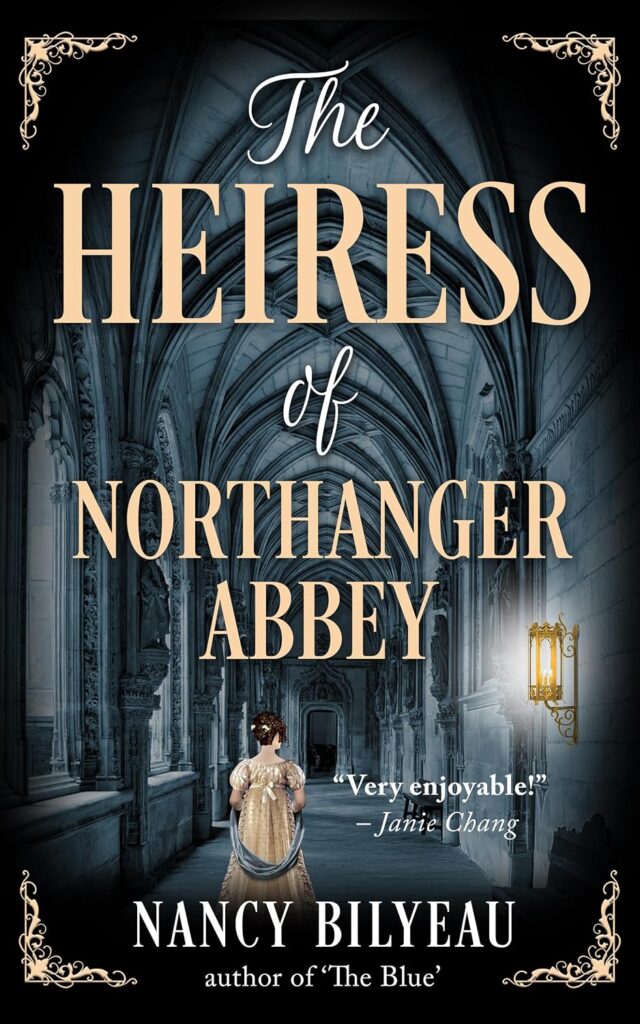
We’re delighted to welcome Nancy Bilyeau to SpoonerReads! Lisa gave The Heiress of Northanger Abbey an A- and was thrilled to have the opportunity to ask Nancy about the story, characters, and inspiration behind the book. We’re honored that Nancy took the time to answer Lisa’s questions and share them with our readers.
The Heiress of Northanger Abbey continues the story of Catherine Morland and Henry Tilney from Jane Austen’s Northanger Abbey.
“The Heiress of Northanger Abbey is a perfect fall read, filled with romantic plots, horrifying villains and a shockingly passionate but twisted plot that will leave the reader gasping. Go gothic this fall and enjoy every single page of it.”
— Lisa, Smart Bitches, Trashy Books

1. What drew you to Northanger Abbey for a sequel story?
The publisher of Muse Books recruited me for a special group project of authors writing sequels, prequels, or retellings of Gothic classics. The others were tackling novels like Phantom of the Opera and Dracula. I was drawn to Northanger Abbey because of how cleverly Jane Austen makes use of the Gothic genre in the novel. I’ve always been enchanted with the characters in Northanger Abbey, and I was excited about the potential of returning to them and seeing what could happen over twenty years. When I got the rights back after that project was finished, I expanded the novel for a solo publication.
2. Henry and Catherine’s relationship has naturally grown and changed since we last saw them. What elements did you want to make sure you kept from their canon incarnations when writing The Heiress of Northanger Abbey?
In my novel, Catherine is still deeply in love with Henry. She fell for him the night they met, and that was that! He was grateful that an attractive, spirited, and kind girl would be so taken with him, and after they married, he valued her even more highly for her empathy, warmth, and loyalty. Those qualities were there, but her naivety and impulsiveness overshadowed them a little at seventeen. He likes to tease her, and I gave them a bantering session at Northanger Abbey as a tip of my bonnet to Jane Austen. But remember, Catherine was a rector’s daughter, and in marrying her, Henry was taking a partner who could naturally help him as a churchman. I worked on the chapters in Woodston to show that Catherine is in her element there. She may always be a trifle uneasy in Northanger Abbey, which was General Tilney’s showcase for wealth and standing. But she feels naturally comfortable with the people in the village of Woodston, perhaps more than Henry could without effort. In my novel, Catherine has a quicker understanding of people who are servants and ordinary workers than the Tilneys, and she is intrinsically kind to people of all classes.
3. What inspired the creation of their two daughters, Susan and Phoebe?
Phoebe has star quality—she’s highly intelligent and beautiful. Catherine is proud of her, but she also sees that Phoebe is high-strung and stubborn and needs to be handled carefully when she’s stressed. I thought that giving Catherine and Henry this standout daughter—someone whose cousins, aunts, and uncles are all rather awed by her—would be exciting for the book but also present challenges, as Phoebe is moving into the heiress of Northanger Abbey role, due to Frederick not having his own children. In the Regency, heiresses could become targets for unethical people. With Susan, I wanted to create another Catherine! At the beginning of Northanger Abbey, Catherine is a lively tomboy. Susan takes after her. It means they are naturally very close, though as Susan gets older that might get more complicated, as often happens.
4. The supernatural, as always, heavily touches Catherine’s story here. Did you have any difficulties deciding whether or not what Catherine overhears at a crucial juncture is real or not?
I always wanted the novel firmly grounded in reality, but suffused with the Gothic. I created different kinds of Gothic atmosphere at various junctures, from sentient houses to a ball in Bath that seems overtaken by the supernatural to folk-horror-esque bonfires to moors crawling with legends and obscured by mist. Catherine knows all about the Gothic—we could say now she is familiar with each trope!—so the novel keeps throwing tests at her. She constantly has to assess people and places to determine what strikes her as uncanny, why, and how she should respond to protect herself and her family.
5. Would you be interested in further sequels about Catherine and Henry’s daughters?
I hadn’t thought about starting a series when I wrote The Heiress of Northanger Abbey, but I’ve had a few requests for more! So I am mulling it over. I am not going to make Catherine or Phoebe sleuths solving murder mysteries. It would have to be a new story drawing them into a plot of psychological drama and high stakes.
Many thanks to Nancy for taking the time to share her insights with us, and to Lisa for this thoughtful interview. We hope you enjoy getting to know more about The Heiress of Northanger Abbey!






I was wondering how well this stands alone or if I should read Northanger Abbey first?